U.S. murder rate nears historic low under Trump. Give credit where credit is due: Defund was a mistake, COVID did not make America uniquely violent. America's post-2020 crime politics did.
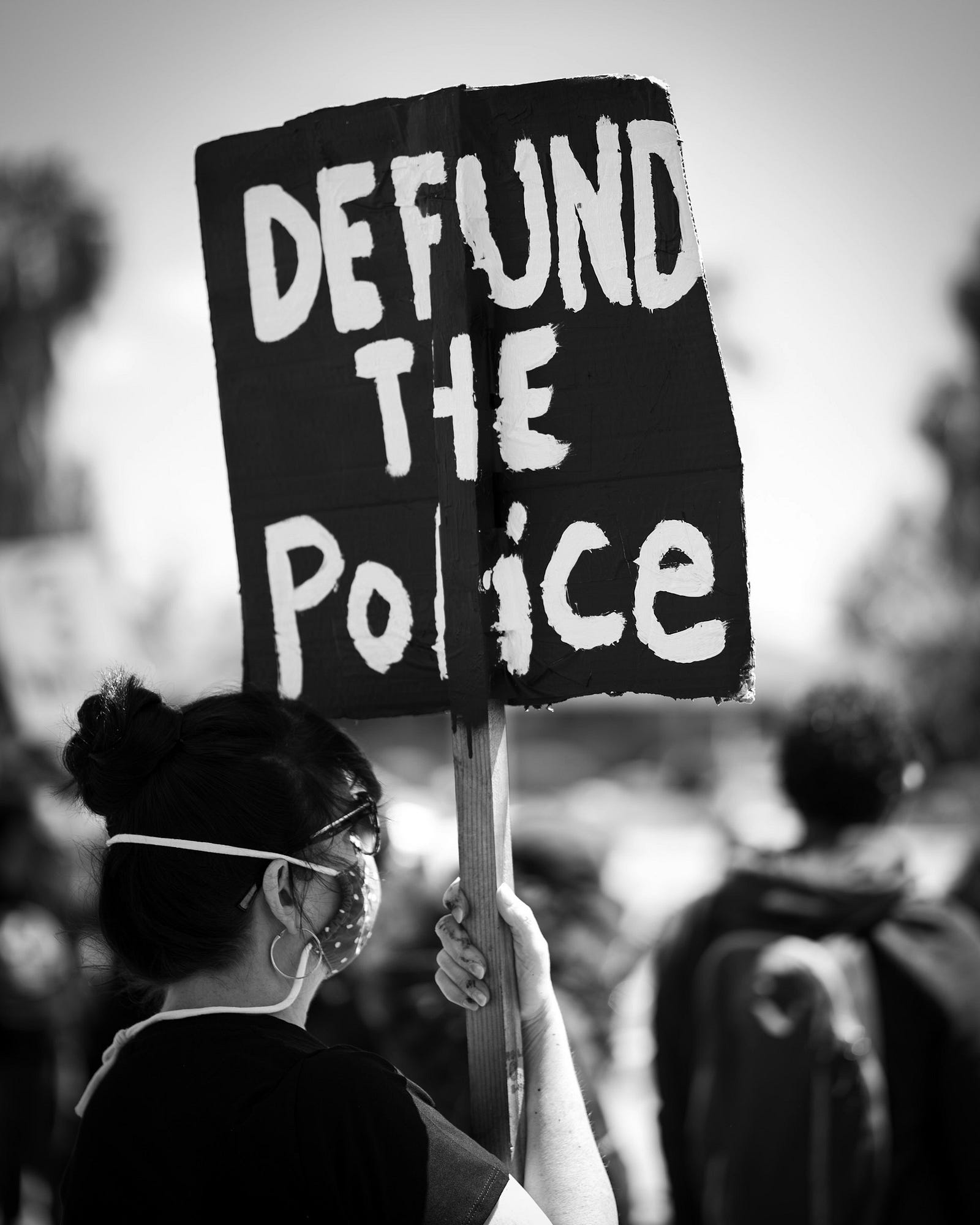
The U.S. murder rate is approaching a historic low under President Donald Trump, and the people who spent the last five years explaining away the post-2020 crime surge would prefer not to notice.
Preliminary FBI data show violent crime fell an estimated 9.3% from 2024 to 2025. Murder and non-negligent manslaughter dropped 18.1%. Robbery fell 18.5%. Property crime fell 12.4%. The Council on Criminal Justice, using data from 35 cities, found reported homicides down 21% in 2025, with gun assaults, robberies and carjackings also falling sharply. Crime analyst Jeff Asher has argued that 2025 likely produced the lowest U.S. murder rate in the modern FBI record, with 2026 on track to go even lower.
That is good news. It is also politically inconvenient news — for Democrats.
For years, Americans were told that the murder spike after 2020 was complicated, mysterious, probably connected to COVID, and certainly not something polite people should connect too directly to the anti-police politics that swept many cities after George Floyd’s murder. But COVID does not explain what happened. Lots of countries suffered through COVID. They did not experience a uniquely American murder spike.
What was uniquely American was the political revolt against law enforcement.
After 2020, police were not merely criticized. They were delegitimized — dehumanized. The slogan was “Defund the police,” but the real damage went beyond municipal budgets. Officers pulled back. Recruitment collapsed. Retirements and resignations rose. Prosecutors downgraded or declined cases. Courts slowed. Bail reforms and pretrial-release policies often sent the message that consequences were negotiable. In many cities, criminal offenders drew the obvious conclusion: the system had lost confidence in itself.
This was never going to make vulnerable neighborhoods safer.
The Government Accountability Office reported this year that law-enforcement resignations and retirements rose from 2019 through 2024, reducing staffing at agencies across the country. It also noted the basic reality that more officers can improve public safety and reduce crime. This is not a complicated theory. A city with fewer police, fewer arrests, slower response times, demoralized officers, reluctant witnesses, and weaker prosecution will have more trouble controlling violent offenders than a city where law enforcement is visible, confident and backed by political leadership.
None of this means a president personally lowers the murder rate by issuing a speech from the White House. Crime is mostly local. Police chiefs, prosecutors, judges, mayors, school systems, neighborhood groups and families all play roles. But national political climate counts. Public order counts. Deterrence counts. A president who backs police sends one signal. A political movement that treats police as the enemy sends another.
Trump deserves credit for being on the right side of that argument. He did not invent the crime decline, and no serious person should pretend that every falling statistic belongs to him. But he also did not spend the last five years indulging the fantasy that America could shame, sue, defund and demoralize its police departments and somehow get safer as a result.
The country is relearning an old lesson. Violence prevention and law enforcement are not opposites. Communities need churches, families, schools, mentors, job programs and youth intervention. They also need cops. They need detectives who can solve shootings, patrol officers who can respond quickly, prosecutors willing to incapacitate repeat offenders, and judges who understand that compassion for criminals cannot come at the expense of innocent people.
The murder decline should be celebrated. It should not be used to memory-hole the mistake that preceded it. Defund was a disaster. COVID did not make America uniquely violent. America’s post-2020 crime politics did.
Now that murder is falling, the lesson is not that the system was fine all along. The lesson is that when a country stops apologizing for enforcing the law, fewer people die.
(Contributing writer, Brooke Bell)